STEP Fellows
STEP is currently funding nine pairs of Fellows. They are studying at Hebrew University, Ben Gurion University and Tel Aviv University. They are researching malaria, retinal disease, diseases of aging, genetics, cancer, desert agriculture, desalination, and climate effects on herding practices in Israel and Palestine.
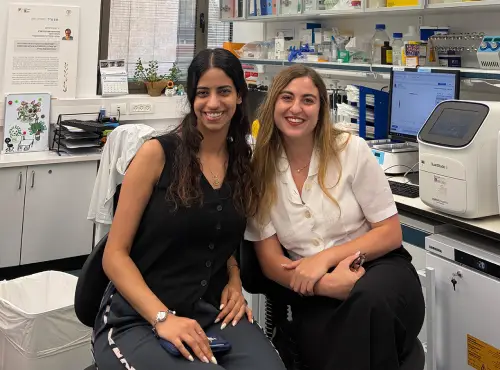
Randa and Adi, Hebrew University
Advisors: Professor Mayan Salton, Ph.D. and
Yiska Weisblum, Ph.D.
Randa and Adi are partnering to determine how to exploit and amplify our own bodily defenses to fight viral infections. Randa is using cell-biological approaches to identify specific biological pathways that are involved in viral infections. Using computational tools Adi is helping Randa interpret the huge amount of data she is obtaining. Together, they will uncover novel antiviral mechanisms and potential therapeutics for viral infections.

Ahed Hamdan and Hadas Eitan, Hebrew University
Advisor: Abed Mansour, Ph.D.
Ahed Hamdan and Hadas Eitan are studying age-related neurological diseases such as Parkinson’s Disease by developing “minibrains” called organoids. Such organoids allow the study of many of the interactions that are seen in whole bodies. Ahed and Hadas also study genes that cause malformations frequently observed in “premature aging” syndromes, such as Downs syndrome.
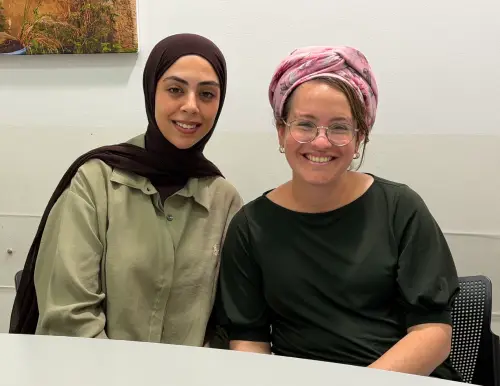
Alia and Tal, Hebrew University
Advisor: Professor Anat Florentin, Ph.D.
Alia and Tal are seeking new ways to control malaria infection. Tal is determining the minimum gene need for the apicoplast, a newly recognized part of the malaria parasite cell. She is creating gene -editing techniques to understand what is required for the malaria parasite to live. Alia is focusing on determining function and regulation of a specific gene, CLPM, that is found within the apicoplast.
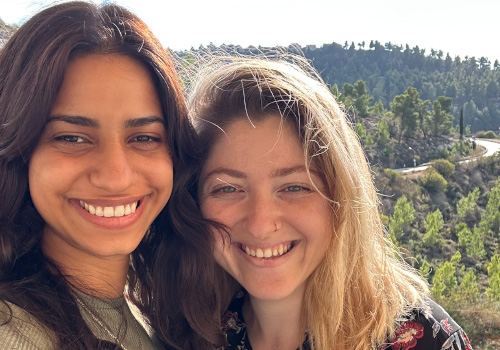
Amanda and Shirly, Hebrew University
Adviser: Anat Florentin, Ph.D.
Amanda and Shirly study how parasites function. Their particular focus is on the malaria parasite, seeking to find treatment to combat malaria, a disease that effects half the world’s population.

Aya and Keren, Hebrew University
Advisor: Ruth Sperling, Ph.D.
Aya and Keren work together to elucidate how newly-discovered RNAs direct synthesis of specific proteins in breast and neural cancer cells.

Nina and Manar, Hebrew University
Advisor: Dror Sharon, Ph.D.
Manar and Nina are searching for new treatments for disease causing blindness. Manar uses genetic analyses to genetically diagnose patients with retinal diseases by identifying mutations, often common to the Middle East. Using this information, she then designs animal models that harbor human mutations in order to understand the development of these diseases.
Nina is seeking new gene-therapies to treat such retinal diseases by both assembling and analyzing global retinal mutation/gene databases and using this information to design and apply novel genetic therapies.”

Raghad and Hila, Hebrew University
Advisor: Professor Sahar Melamed, Ph.D.
Raghad and Hila are using the tools of genetics to study a highly antibiotic-resistant and adaptable opportunistic bacteria known as Pseudomonas aeruginosa. Their information will provide new diagnostics and therapies for such infections. In co-infections with other bacteria, namely Staphylococcus aureus. Pseudomonas exhibits increased virulence and antibiotic resistance. This type of co-infection is frequently seen in patients with cystic fibrosis or chronic wounds. Hila is using new “big-data” analytics to analyze and integrate the data.

Reem and Omer, Hebrew University
Advisor: Professor Batsheva Kerem, Ph.D.
Omer is elucidating biological pathways involved in some cancers and is trying new combinations of therapeutic drugs in in vitro cancer-model systems. Reem is exploring changes in DNA stability and the structure of DNA involved in pathways leading to cancer. They share similar techniques.

Shadi and Adar, Hebrew University, Faculty of Agriculture
Advisor: Sharon Schlesinger, Ph.D.
Shadi and Adar seek to understand, isolate, characterize and successfully grow bovine cells in the laboratory, for potential production of cultured meat. Their research can have significant implication for agriculture and the food industry.